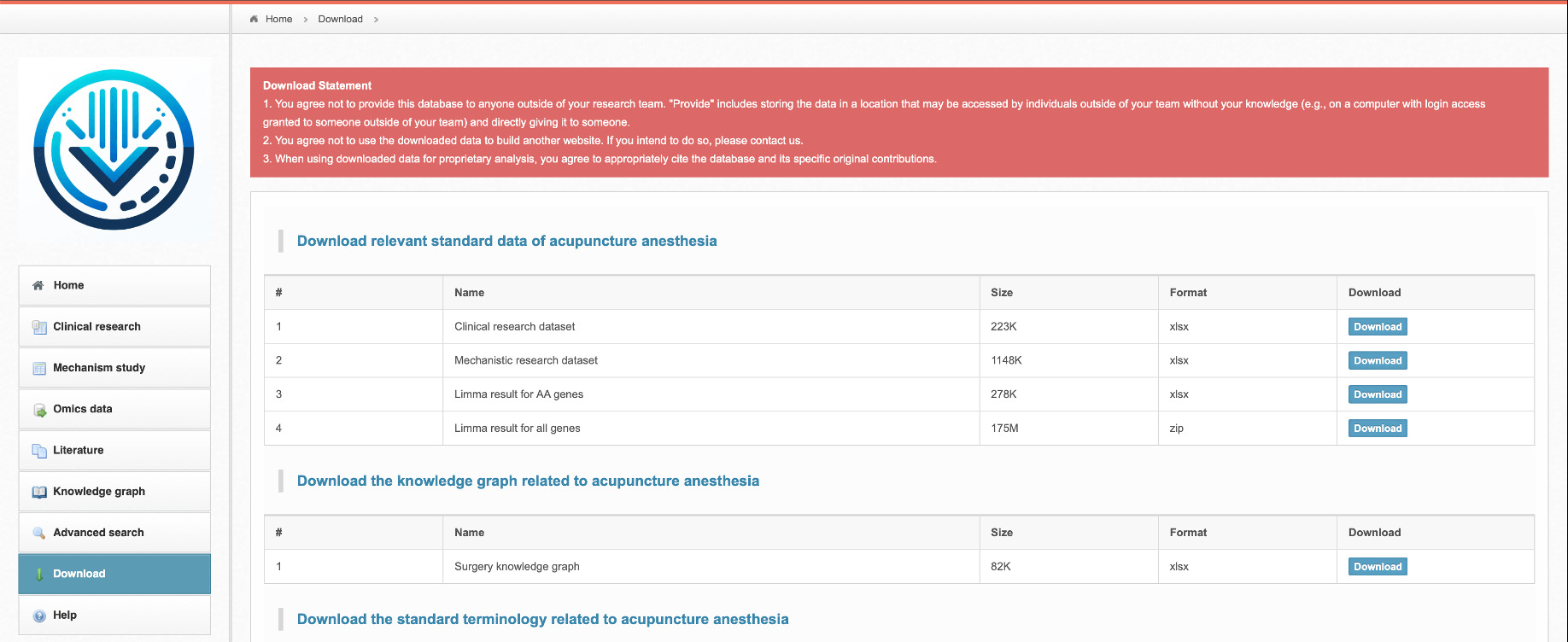
On the left side of the homepage, there is data statistics for AAKD and a navigation bar that showcases the structure of the AAKD's functionalities, enabling users to quickly locate the desired information. In the center of the homepage, we provide a keyword search function, and convenient links for data viewing and downloading.
On the home page, users can perform the following operations:
1、Utilize the left-side navigation bar to easily browse and utilize the various modules and their functionalities of the AAKD.
2、Enter the interested keywords in the search box to find relevant acupuncture anesthesia data.
3、Click the button located at the upper right corner of each of the three main modules to conveniently view or download the corresponding module's data.
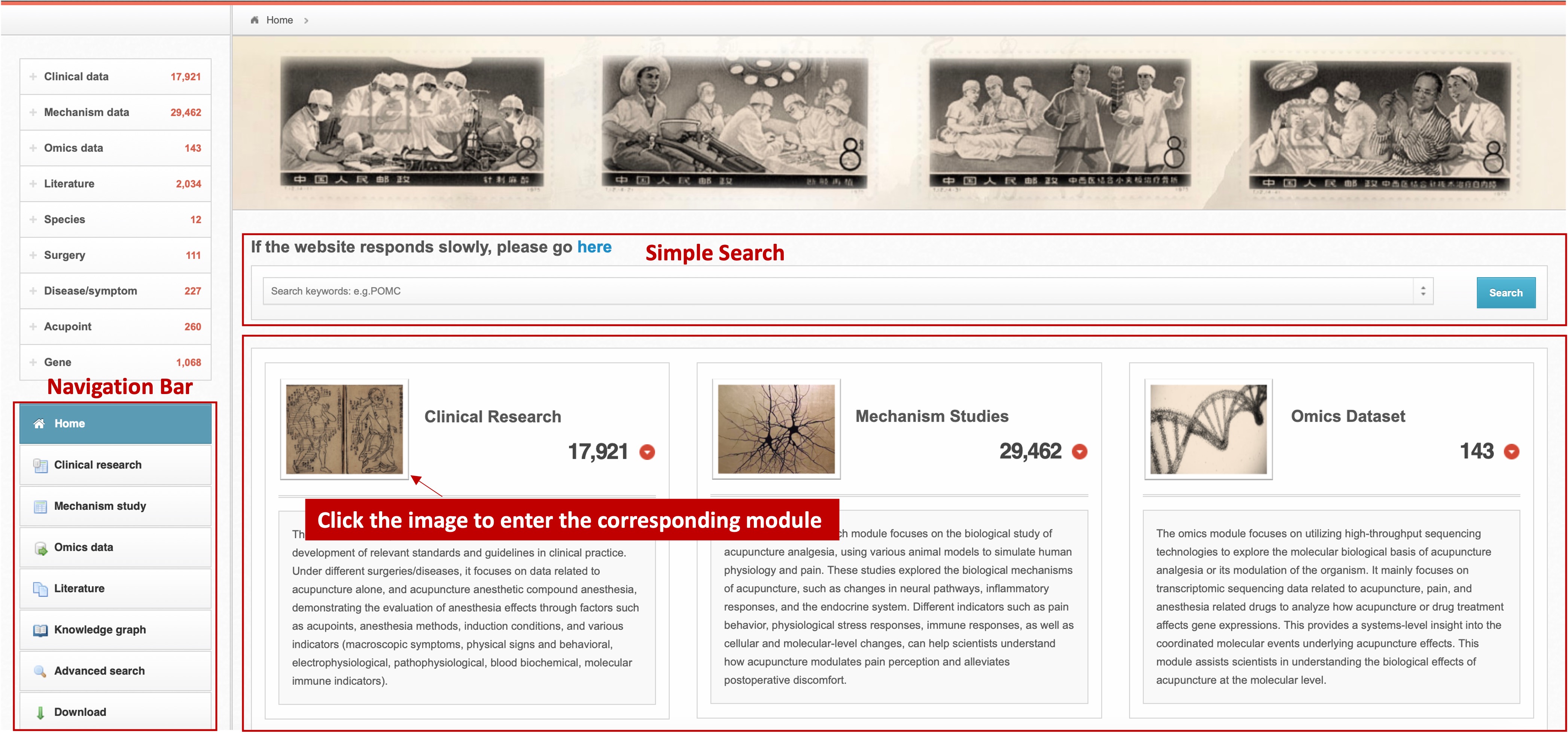
Clinical research on acupuncture anesthesia primarily focuses on precise selection of acupoints and determination of specific stimulation methods in different surgical and disease contexts to enhance sedation and analgesic effects. In some studies, acupuncture is combined with traditional pharmacological anesthesia to augment the anesthetic effect. Evaluation of acupuncture anesthesia effects covers various clinical outcome measures, including macroscopic symptoms, signs, behavioral indicators, as well as electrophysiological, pathophysiological processes, blood biochemistry, and molecular immunological indicators.
This module provides comprehensive clinical research data, with intuitive statistical charts showcasing the reported studies on various surgeries and acupoints in published acupuncture anesthesia clinical research. Above the table, there are quick-view buttons for different surgical categories. By clicking on the hyperlinked surgical names in the table, users can access relevant clinical research data. AAKD has established a multi-dimensional quality control system to ensure the quality and reliability of clinical module data. By clicking the "View" button, users can further explore more detailed information about each research study.
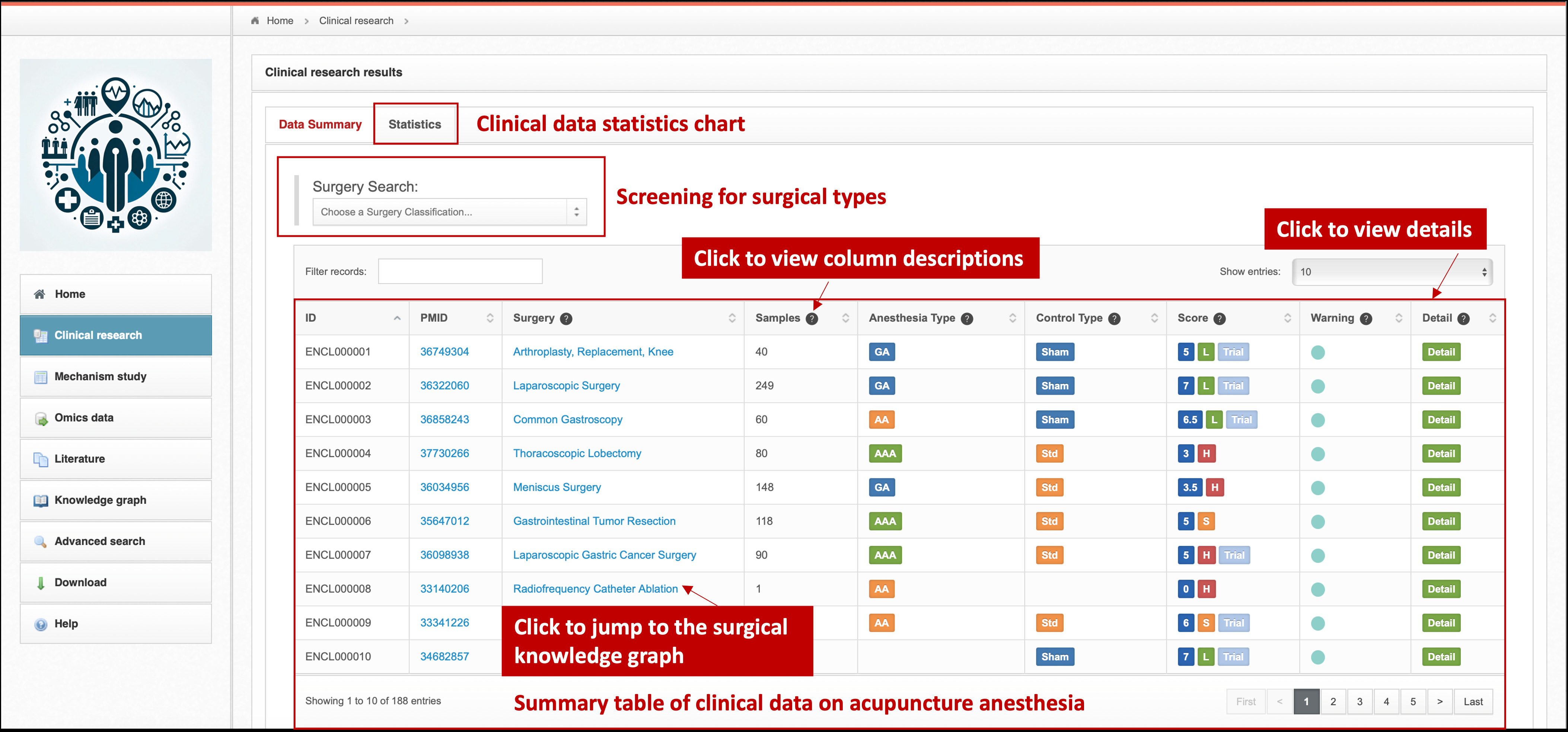
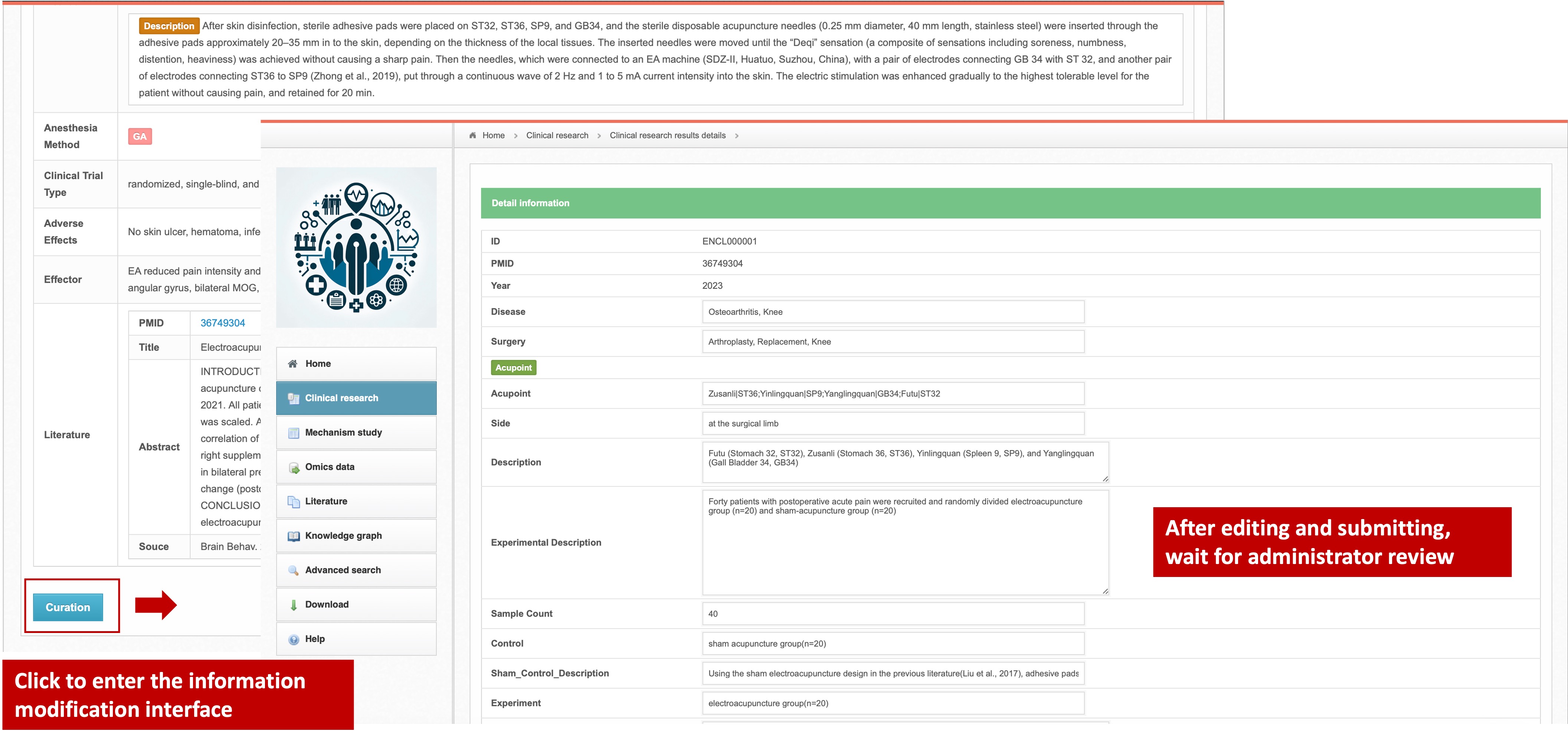
In the detailed information page of clinical research, users can delve into the details of specific acupuncture anesthesia clinical studies. This interface provides key information including the publication year, disease and surgical names, acupuncture locations (covering acupoint, acupoint code, and specific location). Additionally, the page provides a detailed description of the experimental design, total number of cases in the clinical study, number of cases in the control group and experimental group, recorded indicators, adjunct medication, stimulation and induction methods, anesthesia techniques, clinical trial types, effects, and relevant literature information.
AAKD introduced a "Curation" feature on the clinical study details page. This functionality enables users to submit modification suggestions for the annotated information of existing studies. All user-submitted revisions will be reviewed by administrators and, upon approval, updated in the database in real-time. This approach not only ensures data accuracy and timeliness but also establishes a continuously optimized crowdsourced curation mechanism. By enhancing quality control and encouraging active user participation in knowledge base refinement, this feature promotes the standardization and sharing of data resources within the field. Click the "Curation" button at the bottom of the details page to access the comment information editing page.
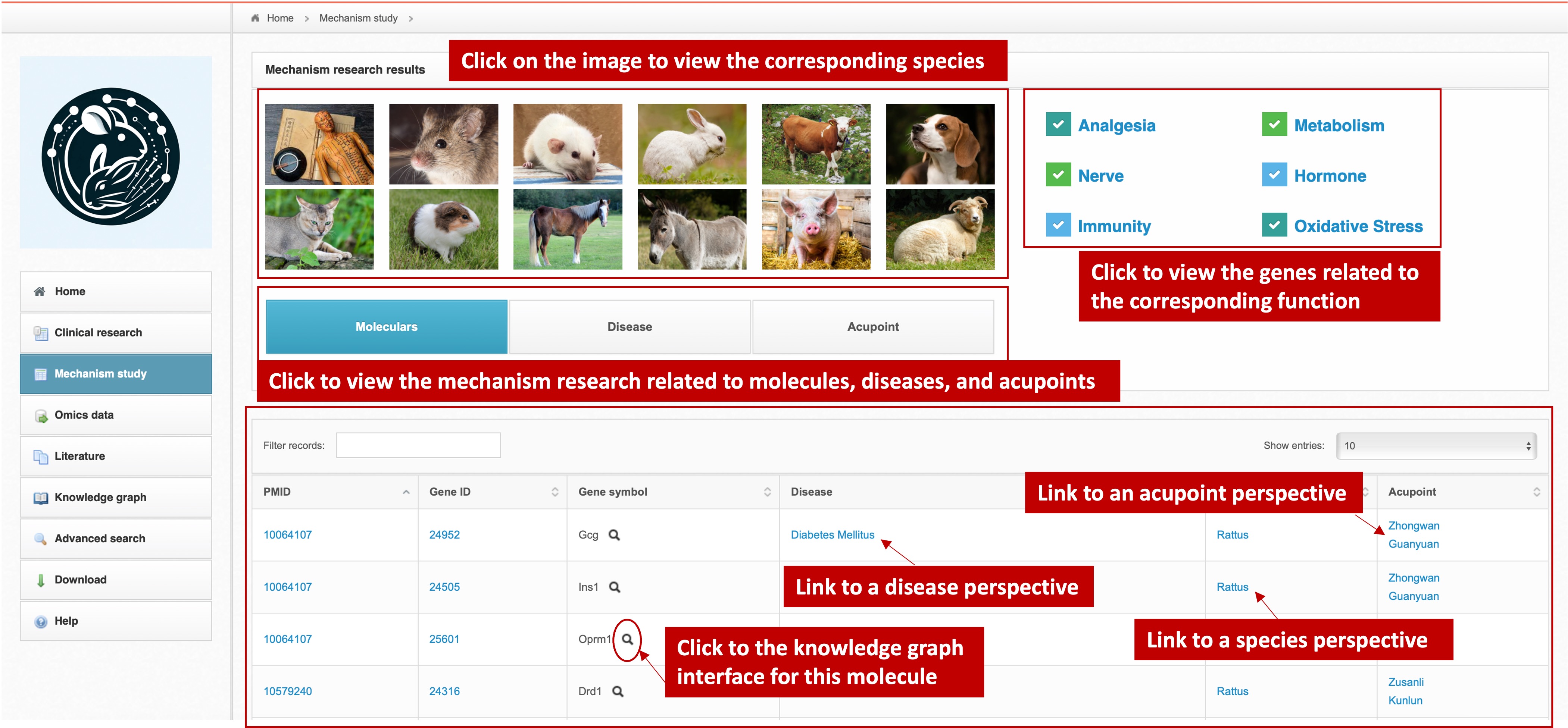
The mechanism studies focus on exploring the potential mechanisms of acupuncture-induced analgesia. These studies utilize various animal models, such as mice, rabbits, etc., to simulate human physiological responses and pain perception. The research primarily concentrates on the stimulation of specific acupoints, observing their effects on postoperative pain in animals, and delving into the biological mechanisms of acupuncture, including neural pathways, inflammatory responses, and changes in the endocrine system. Researchers investigate pain behaviors, physiological stress responses, immune reactions, as well as cellular and molecular changes to reveal how acupuncture modulates pain perception and alleviates postoperative discomfort.
This module provides users with acupuncture mechanism research data for 6 different species. By clicking the "Molecular" button, users can view the association information between acupuncture research-related molecules and diseases, species, and acupoints. Users can also click on the hyperlinks in the table for diseases, species, and acupoints to navigate to the respective annotation tables. If the mechanism molecule being studied has an encoding gene, clicking the button next to the gene will link to the knowledge graph interface for that molecule.
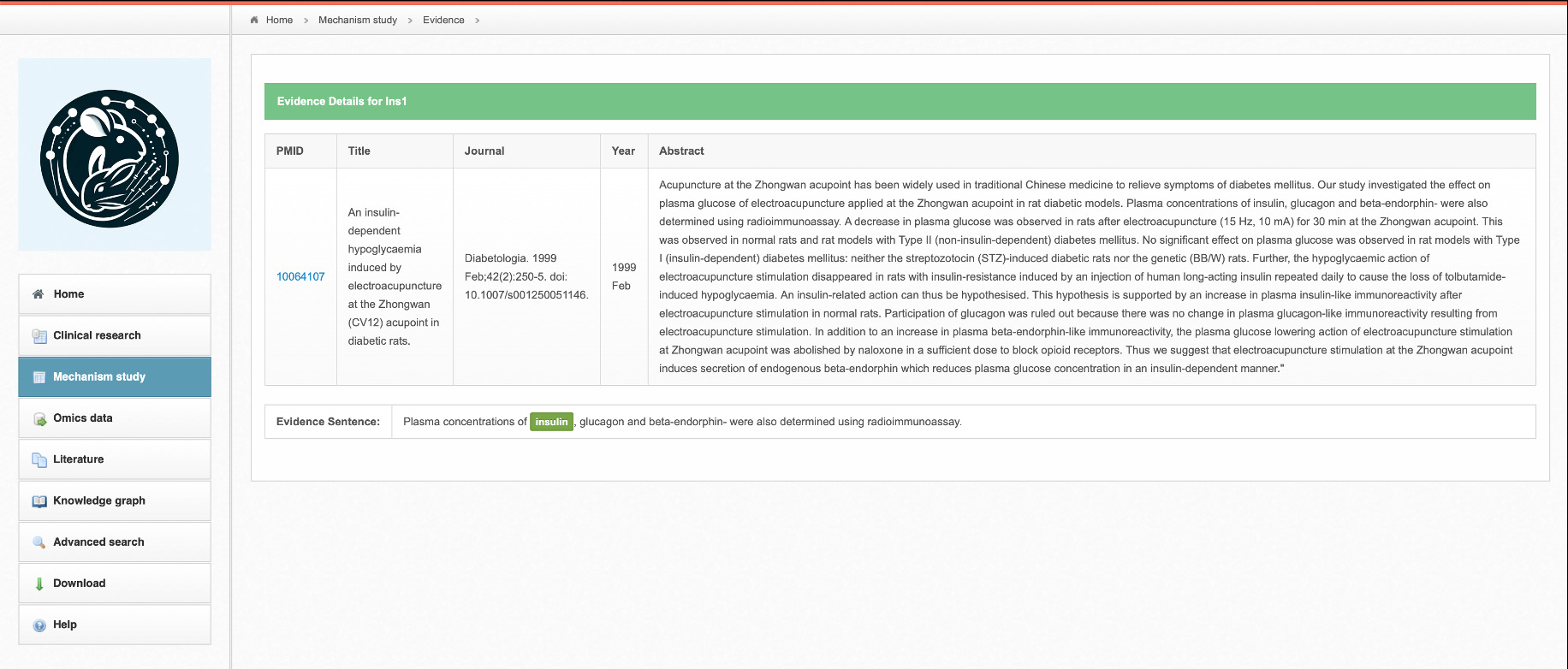
By clicking on the PMID hyperlink, users can access sentences in the literature that mention the molecule.
Clicking on the keywords in the upper right corner (e.g., Analgesia, etc.) allows users to filter out information tables of literature sentences that simultaneously mention the molecule and the keyword through fuzzy queries.

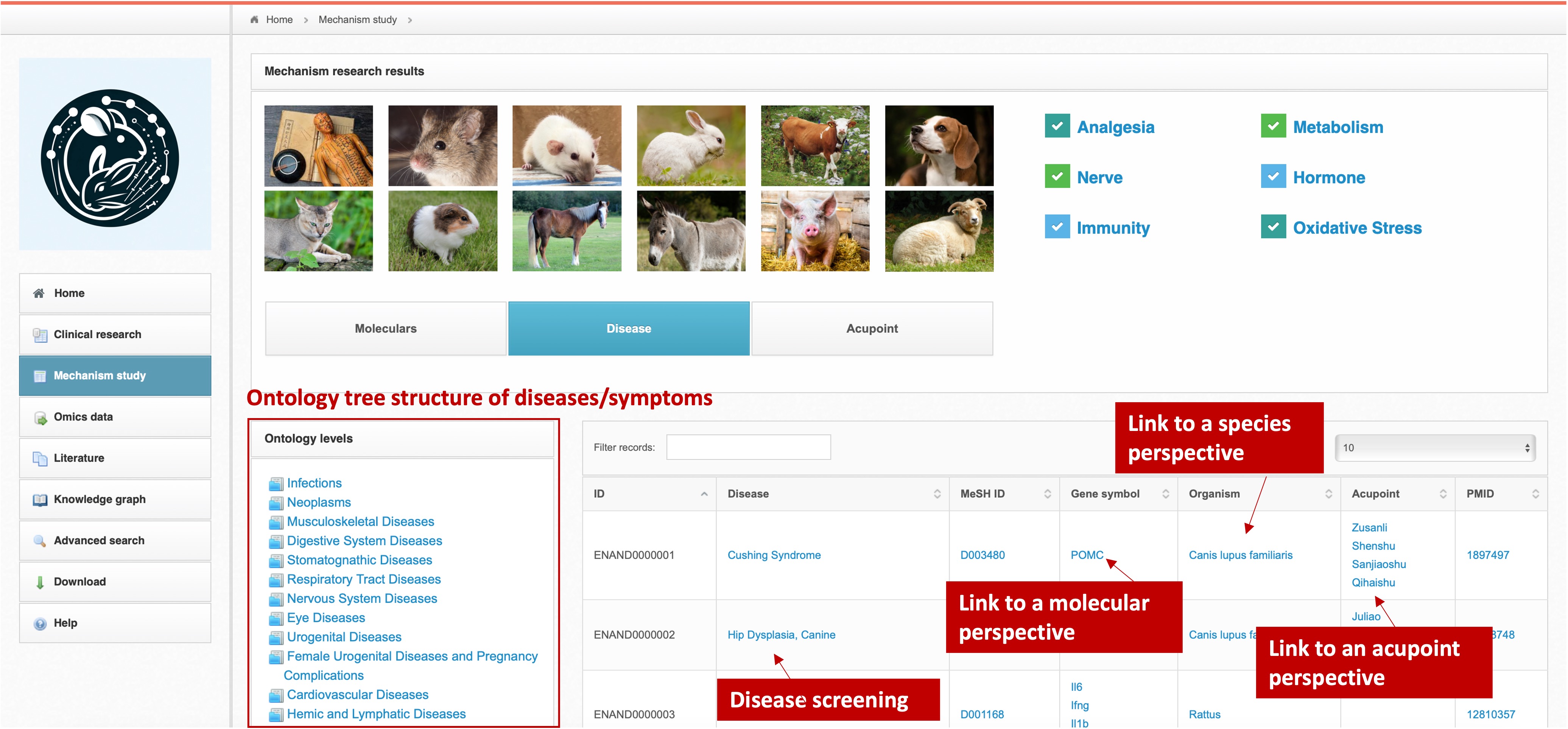
Clicking the "Disease" button provides users with the association information between acupuncture research-related diseases/symptoms and molecules, species, and acupoints. The left side presents the ontology tree structure of diseases/symptoms, and the table also provides hyperlinks for quick information retrieval.
Clicking the "Acupoint" button allows users to view the association information between acupuncture research-related acupoints and molecules, species, and diseases/symptoms. We provide the GB/T 12346-2021 and GB/T 13734-2008 coding, standard naming, and meridian names corresponding to the acupoints, and categorize them into body acupoints and auricular acupoints.
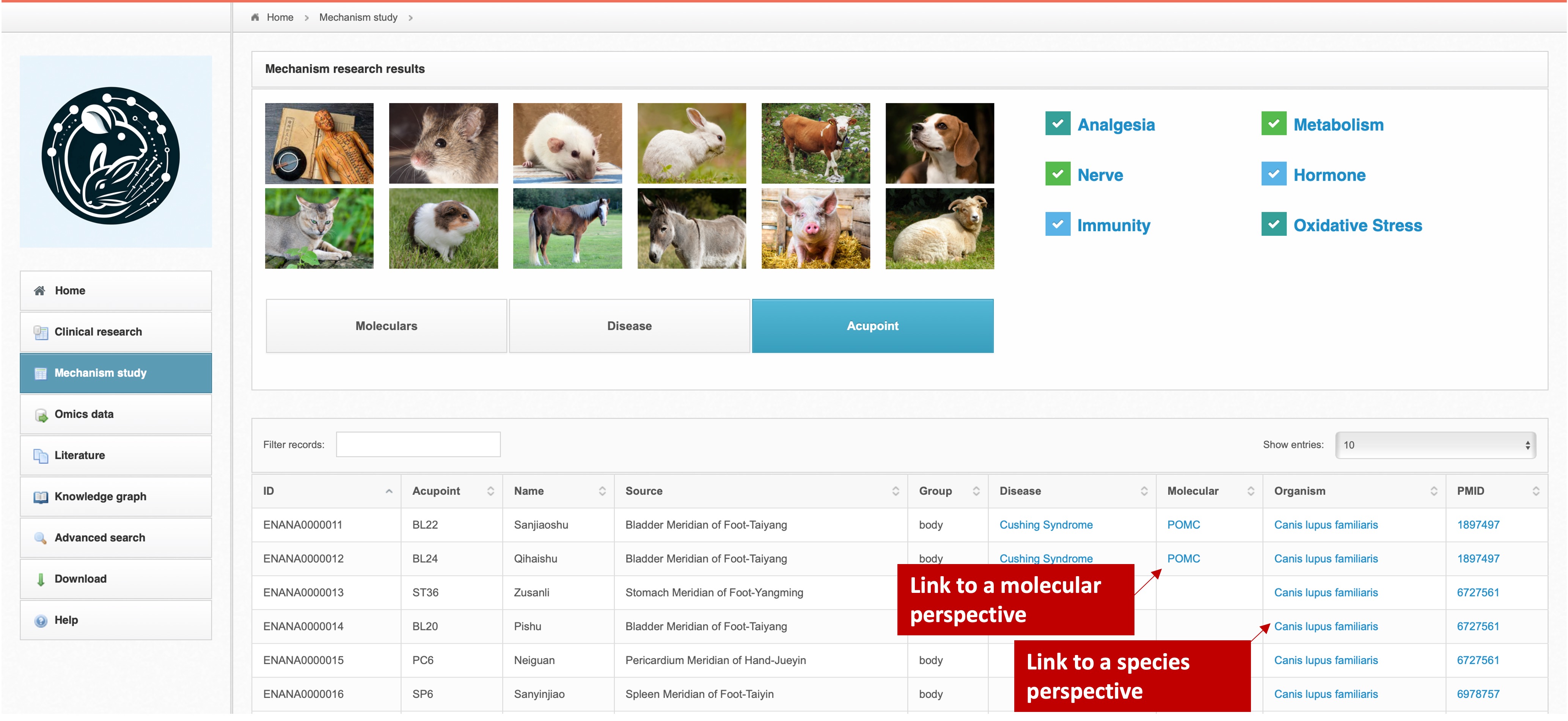
Click on a species image to access an overview of the corresponding species' molecules, diseases, and acupoints.
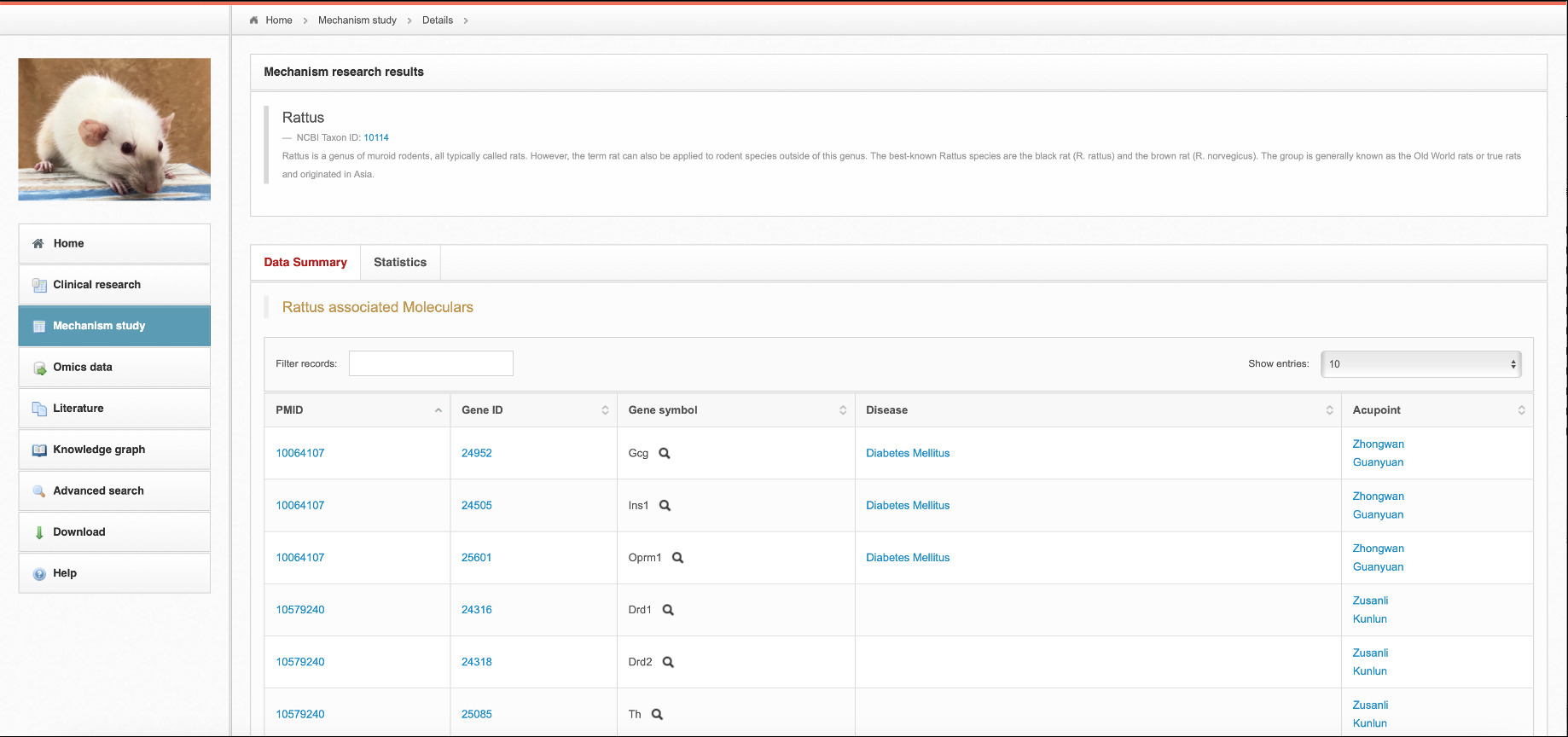
Acupuncture, pain and anesthesia related omics studies focus on exploring the molecular and biological basis of acupuncture-induced analgesia or its modulation of the body's systems using high-throughput sequencing technologies. These studies integrate transcriptomics, epigenomics, and other omics approaches to comprehensively analyze how acupuncture influences biological processes in the human body and uncover key molecular pathways and biomarkers affected by acupuncture. They help scientists understand the biological effects of acupuncture at the molecular level, provide modern scientific support for traditional acupuncture therapy, establish a solid scientific foundation for the clinical application of acupuncture anesthesia, and pave the way for future personalized acupuncture treatment strategies. This module provides detailed omics research data.
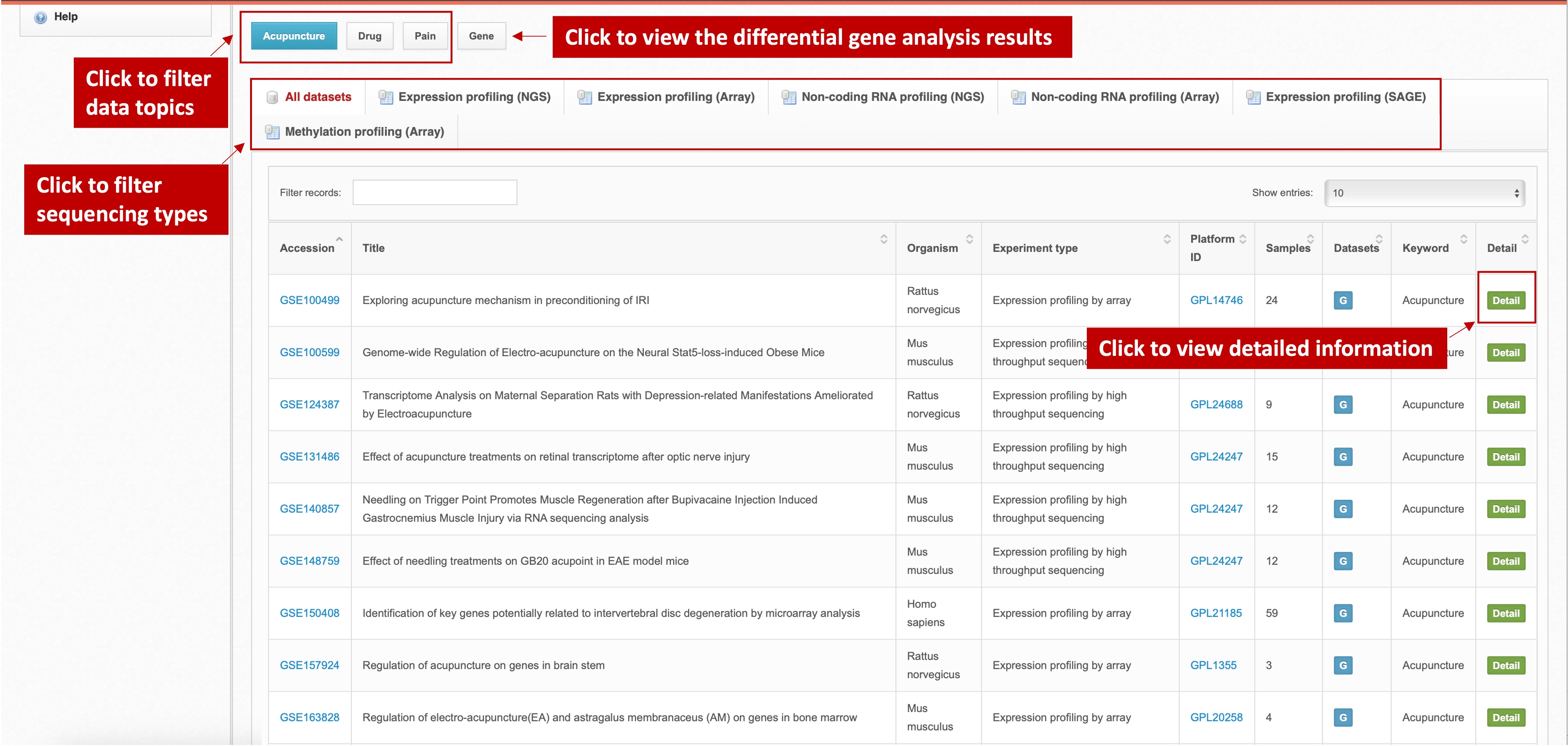
This module provides comprehensive omics data. The statistical graphs on the page clearly display the number of datasets for different sequencing technologies in published omics studies. Quick-view buttons for each sequencing technology category are available at the bottom of the page, allowing users to directly access relevant data. For example, clicking the "Expression Data (Array)" button enables quick access to acupuncture-related transcriptomics research data, including GEO GSE ID, species, type, platform, sample size, and FTP download. By clicking the "View" button, users can obtain more detailed information about each study.
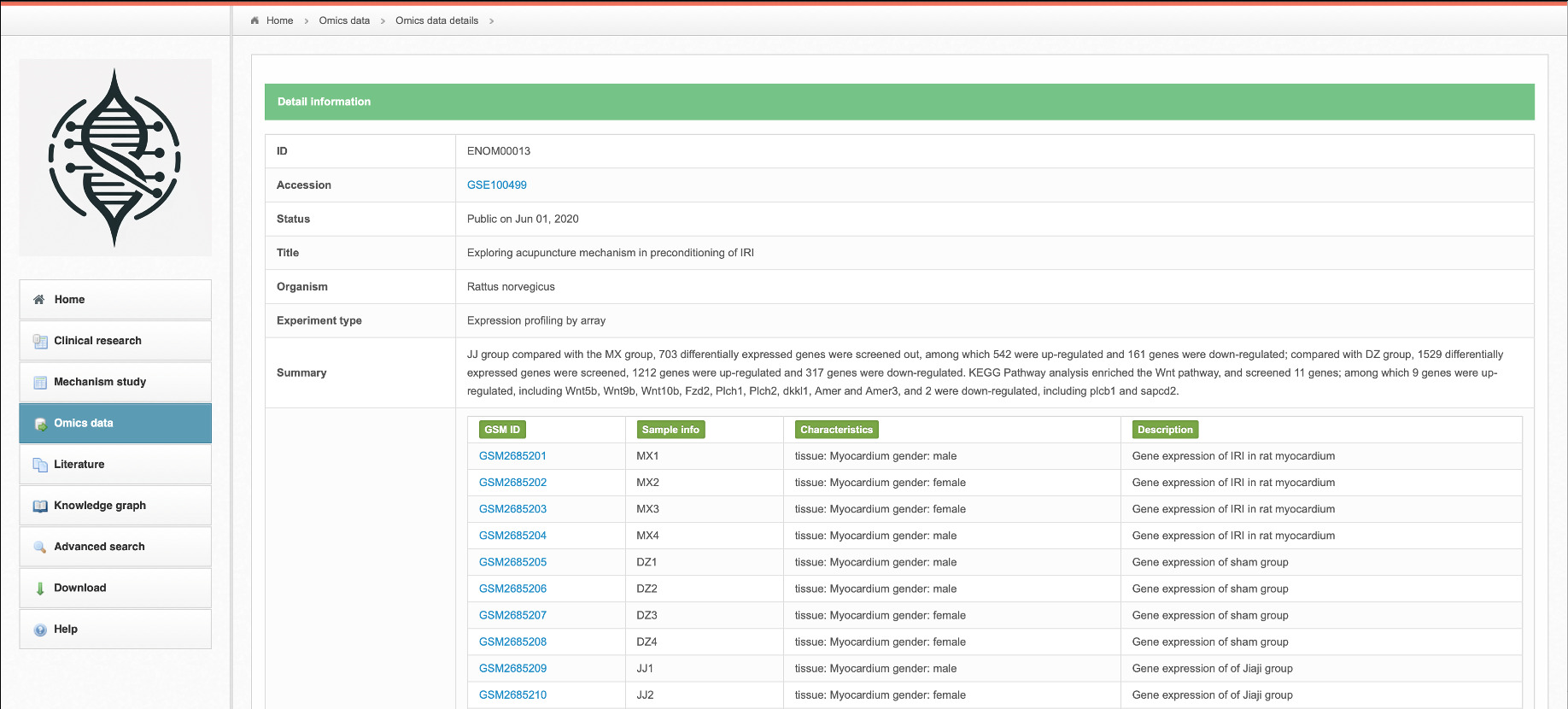
In the detailed information page of omics data, users can delve into the experimental design and data details of specific acupuncture studies using high-throughput sequencing. This interface provides key information including GEO GSE ID, title, species, experiment type, experimental design, sample grouping, platform, and download links.
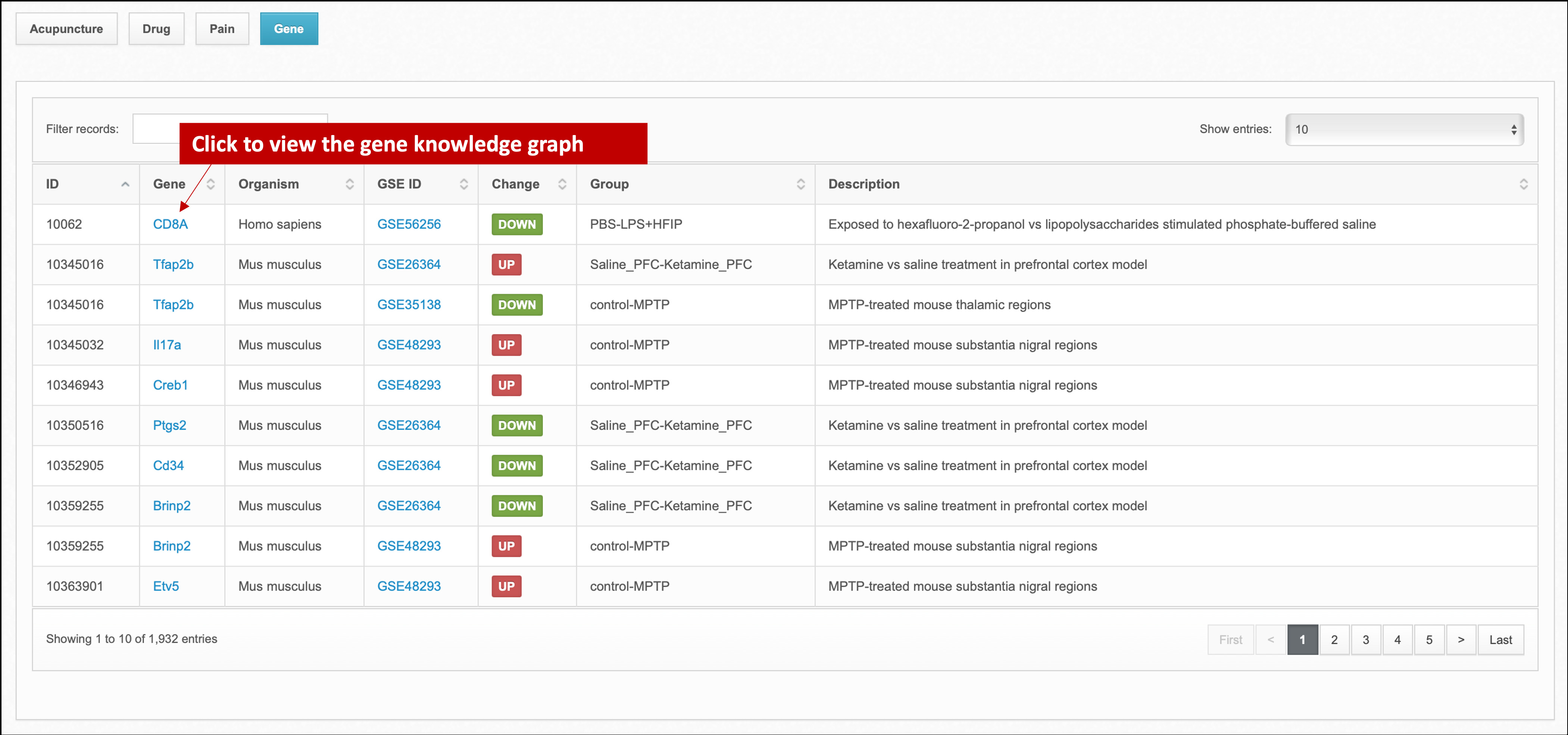
We performed differential gene expression analysis on expression profile datasets, identifying 592 differentially expressed genes (DEGs) under different experimental conditions out of 1,068 genes previously reported in acupuncture studies. The omics module now features an interactive "Gene" query function, enabling users to comprehensively examine expression changes of these genes across various experimental groups.
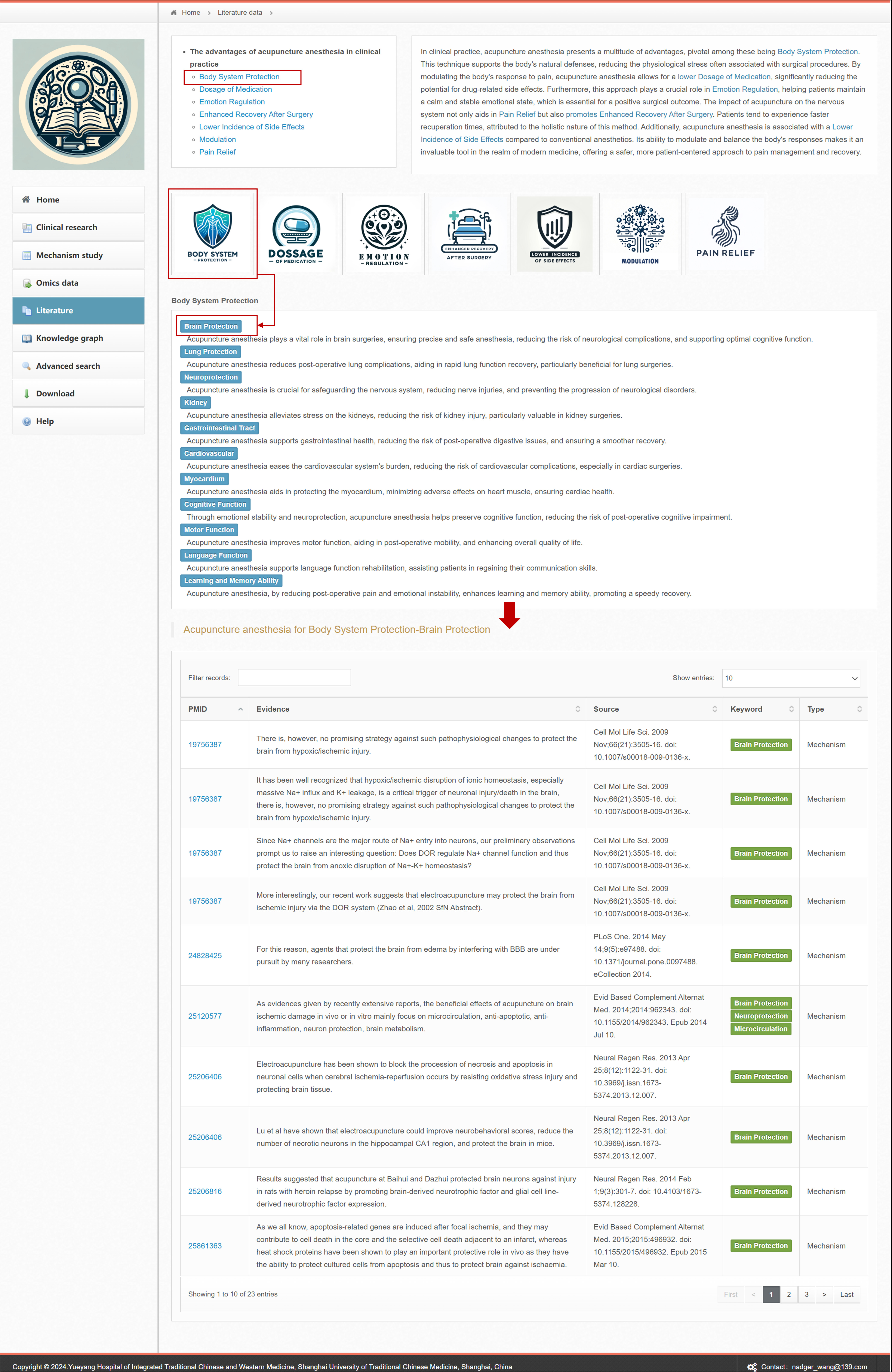
This module presents comprehensive literature support data regarding the advantages of acupuncture anesthesia to users. The page includes a visually appealing list showcasing different emphasized benefits of acupuncture anesthesia found in published research. To facilitate quick access to specific categories of information, the page is also equipped with quick-view icons for various categories. For example, by clicking the "Body system protection" button, users can swiftly browse through relevant literature studies on the organ protection aspects of acupuncture and view key supporting sentences from the literature. This module aims to provide rich and direct literature support, enabling users to gain deeper insights and conduct further research in this field.
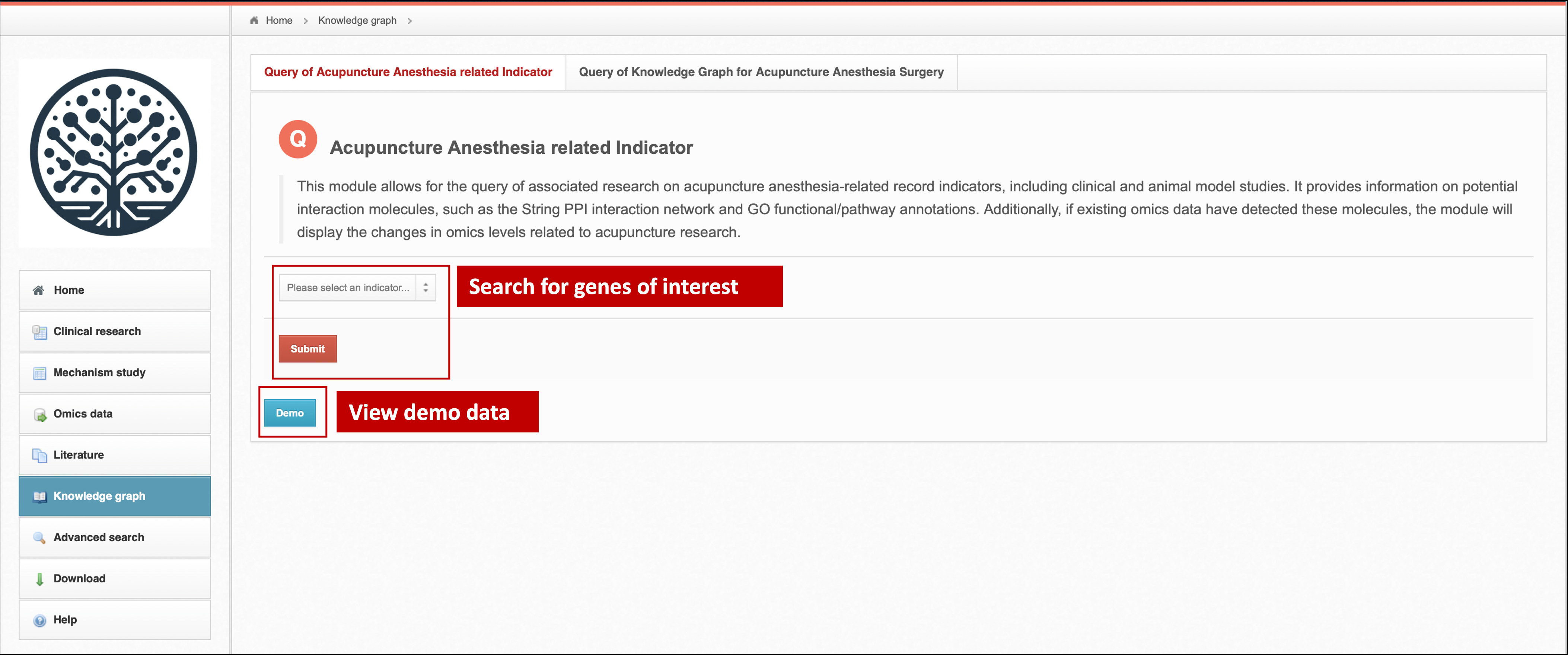
By integrating the data from the three major modules, AAKD has developed the Knowledge module. Users can query molecules of interest. We provide information on the acupoints associated with the molecule through mechanisms and clinical research, as well as molecular annotation information.
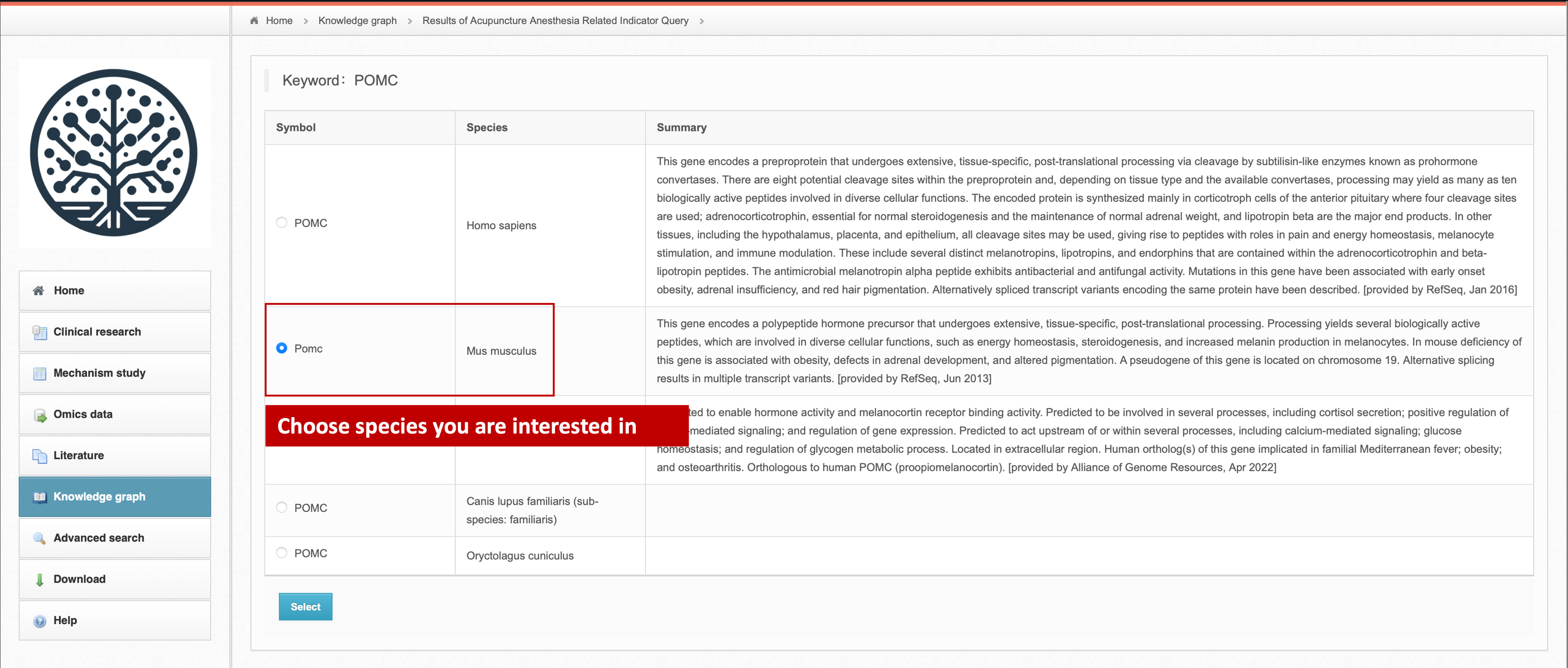
In the search results, the Sankey diagram for the queried molecule encompasses all the acupoint information related to clinical or mechanism studies that mention the molecule. We provide information on the acupoints associated with the molecule through mechanisms and clinical research, as well as molecular annotation information, including String PPI (Protein-Protein Interaction) networks, GO (Gene Ontology) functions, pathway annotations, and more. By integrating existing omics data, users can observe the expression profiles of the molecule in public omics data.
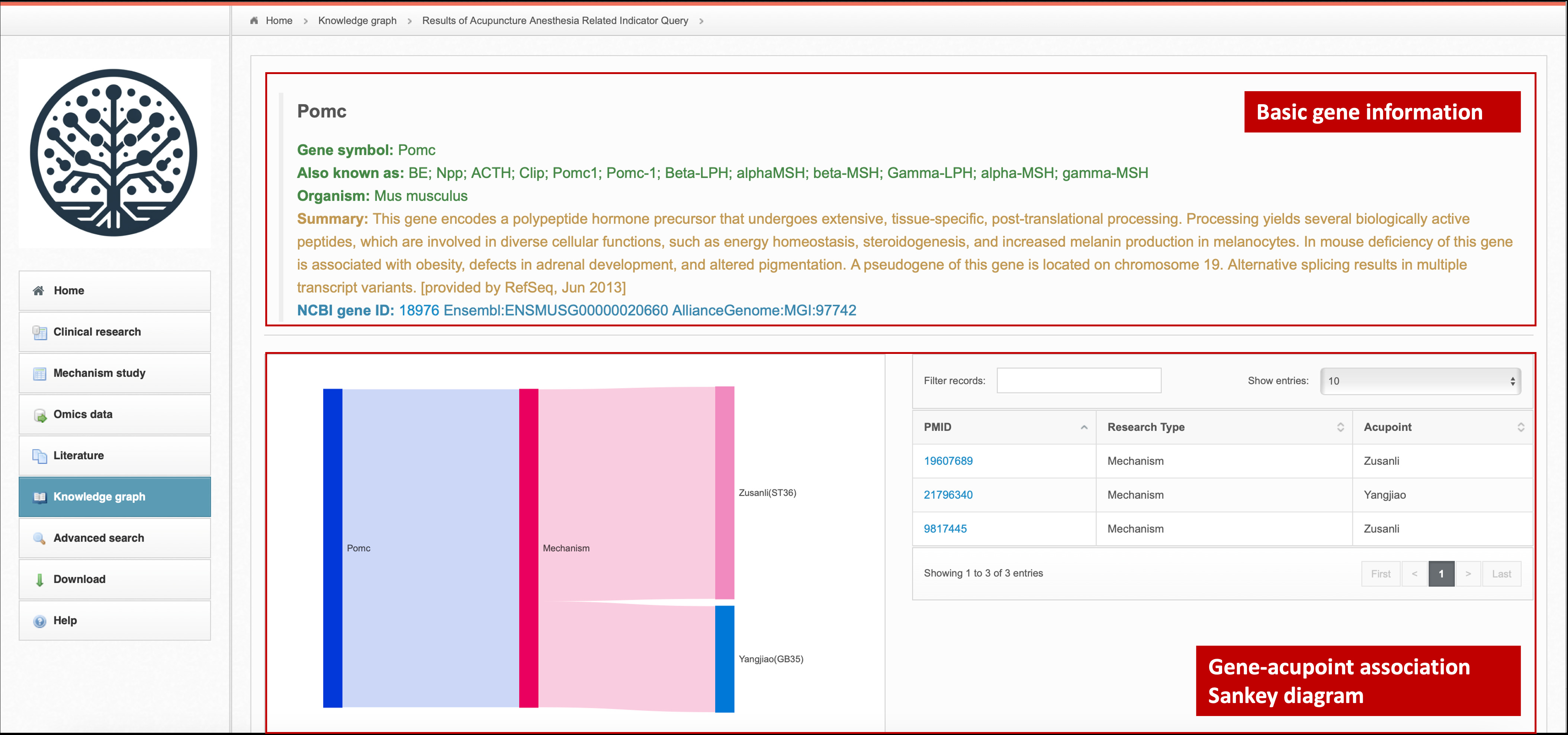
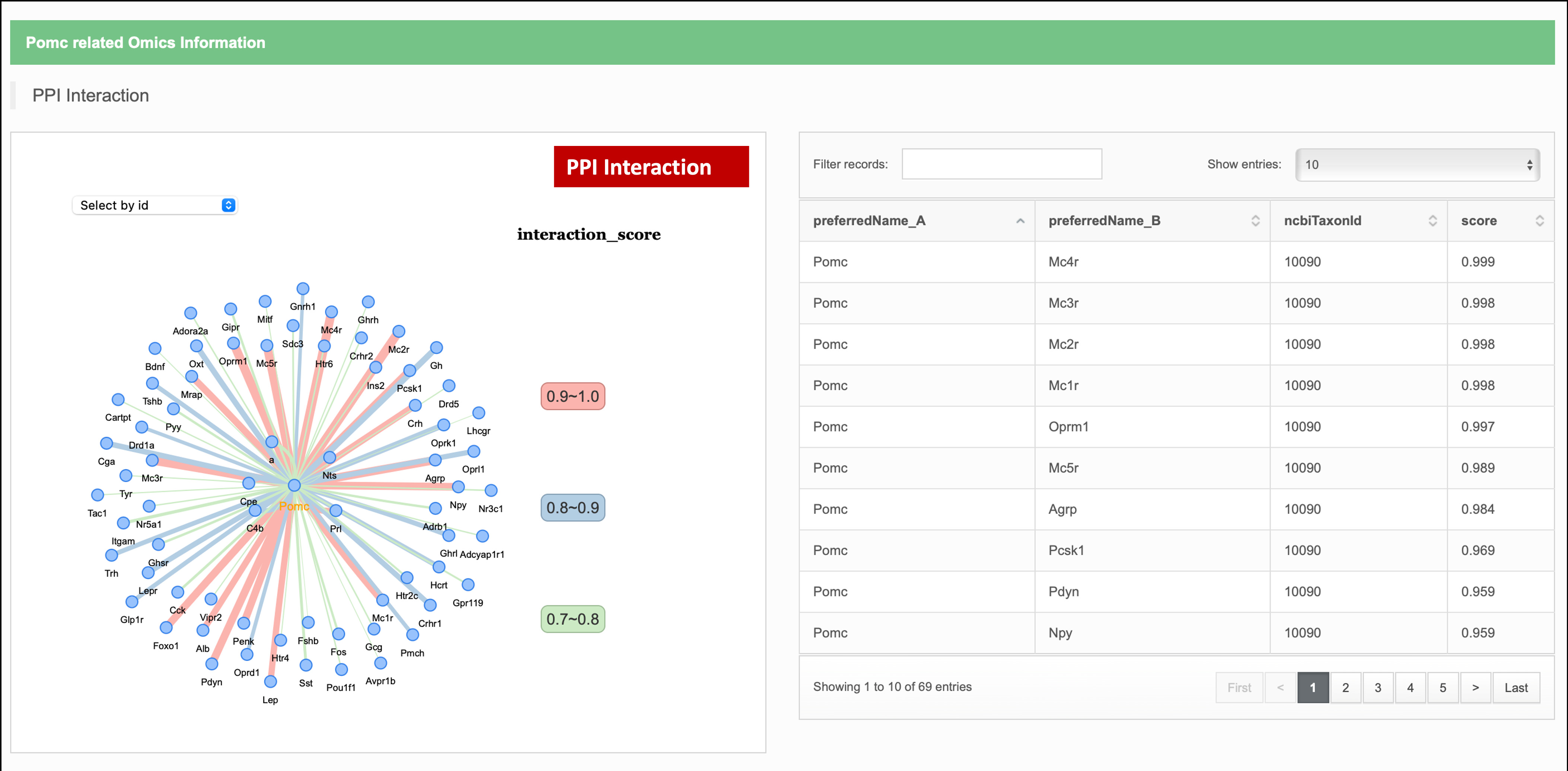
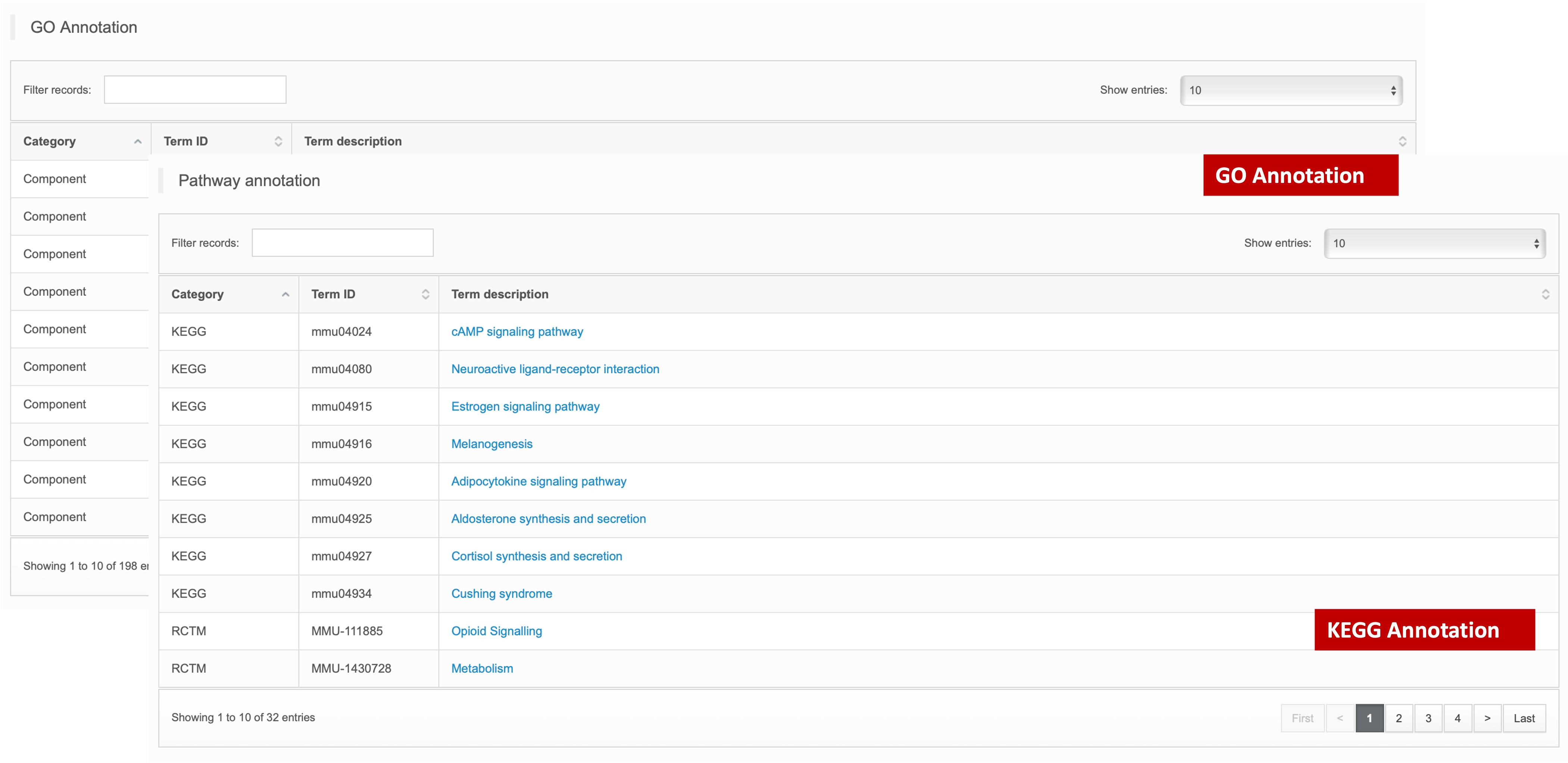
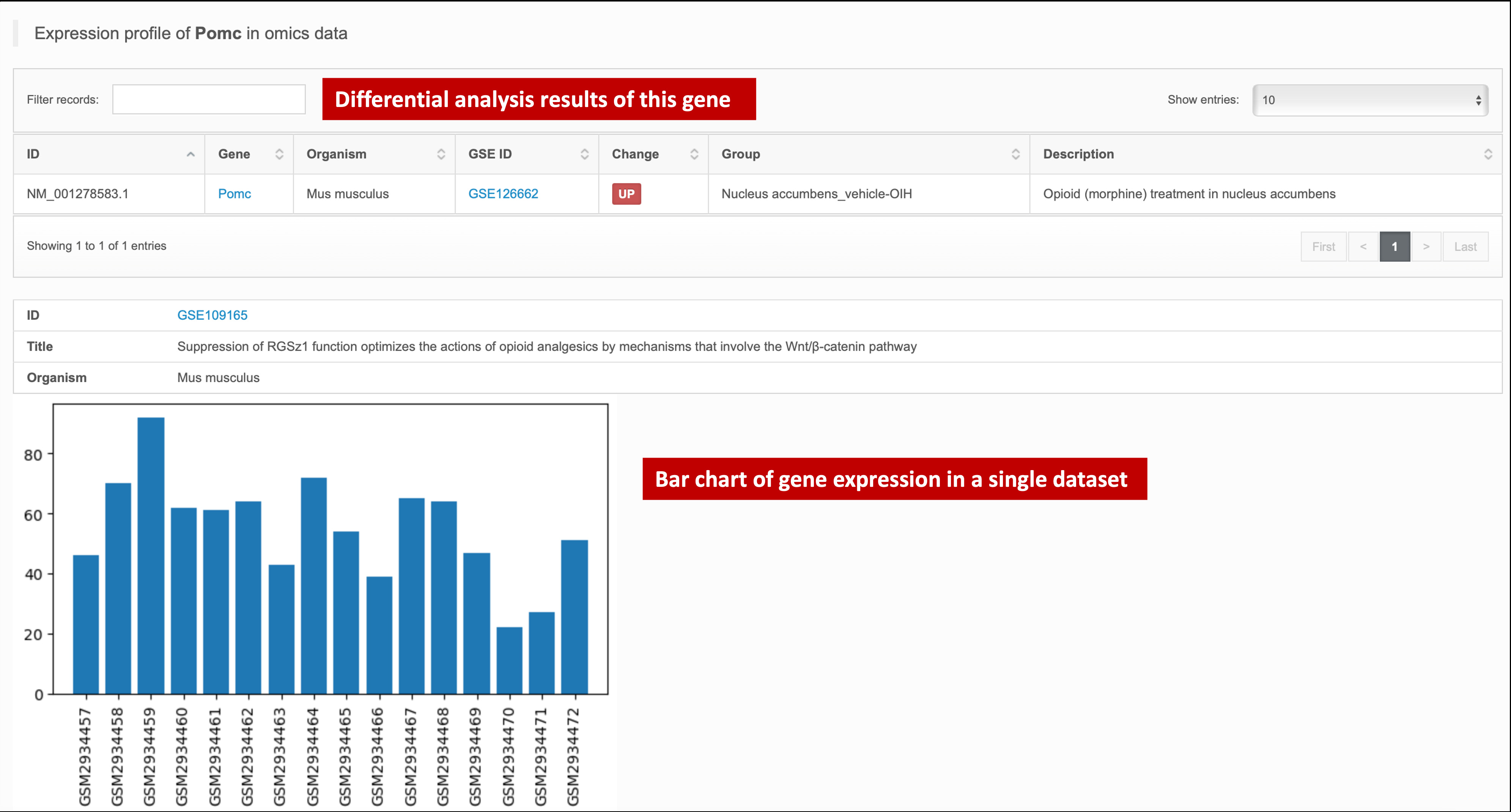
This module provides comprehensive query functionality for the knowledge graphs of acupuncture anesthesia surgery. Anesthesia for the query surgical procedure is presented using treemap and graph summary. The content of knowledge summary includes acupoint selection, stimulation method, auxiliary medication and indicator. These knowledge graphs provide intuitive and systematic views of various aspects of acupuncture anesthesia surgery, enabling users to quickly access relevant knowledge and gain in-depth understanding of the key elements of acupuncture anesthesia surgery.
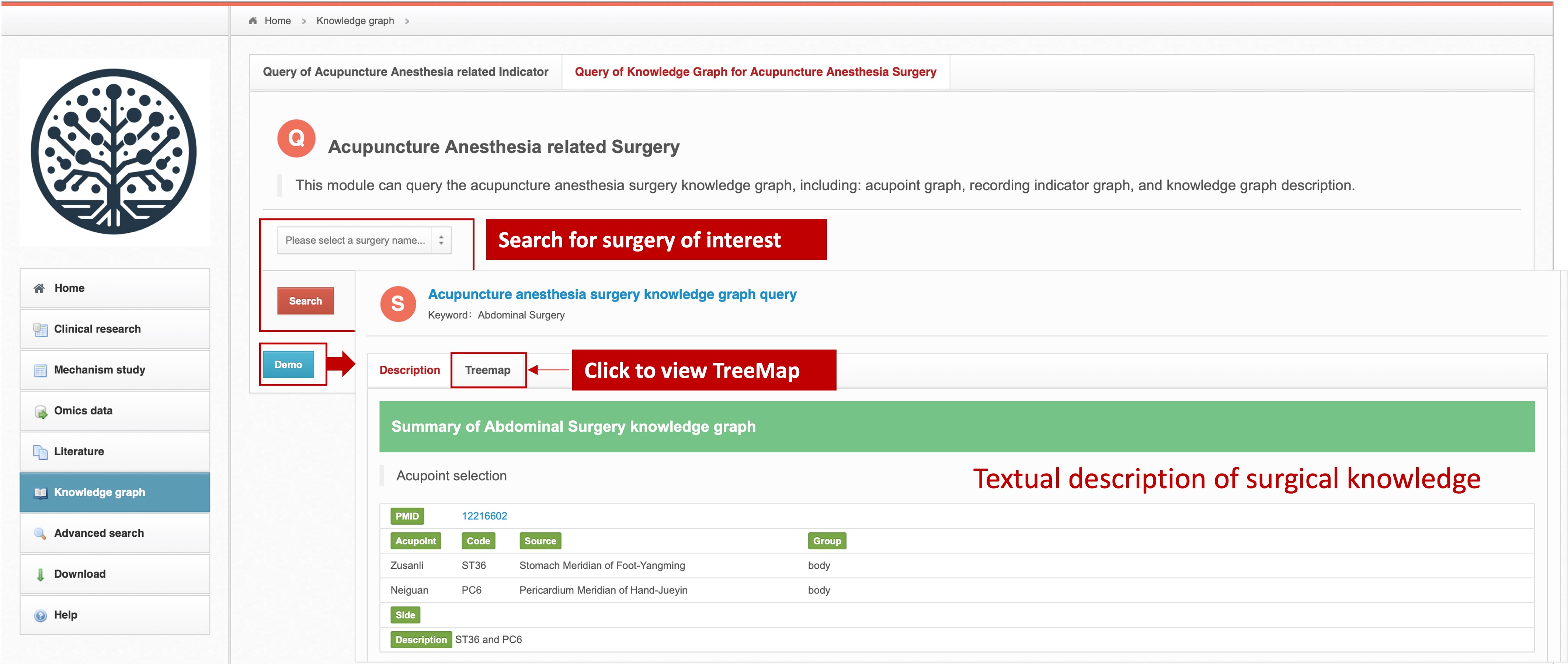
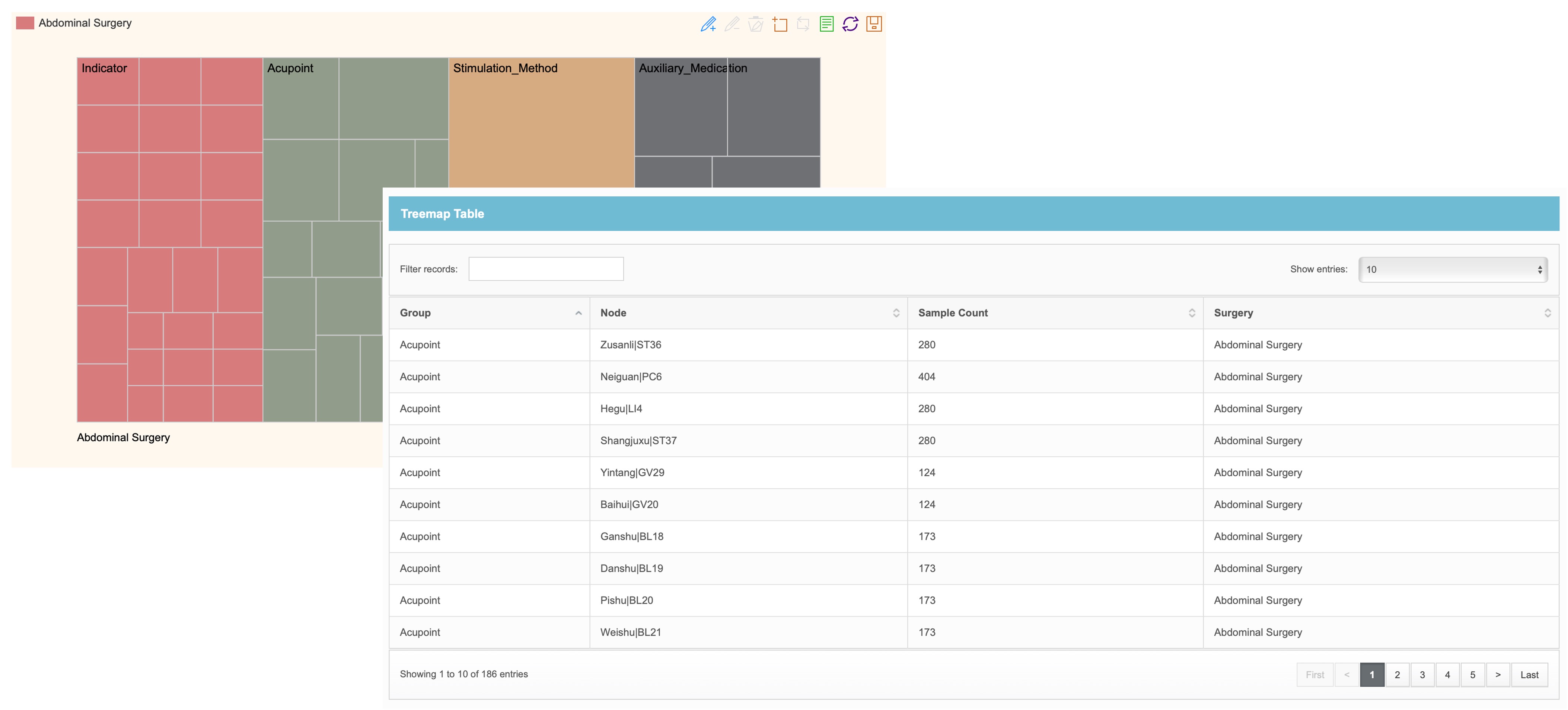
Users can enter keywords in the search box on the homepage to conduct a search. The search results will include summaries of all clinical and mechanism studies related to the keyword.
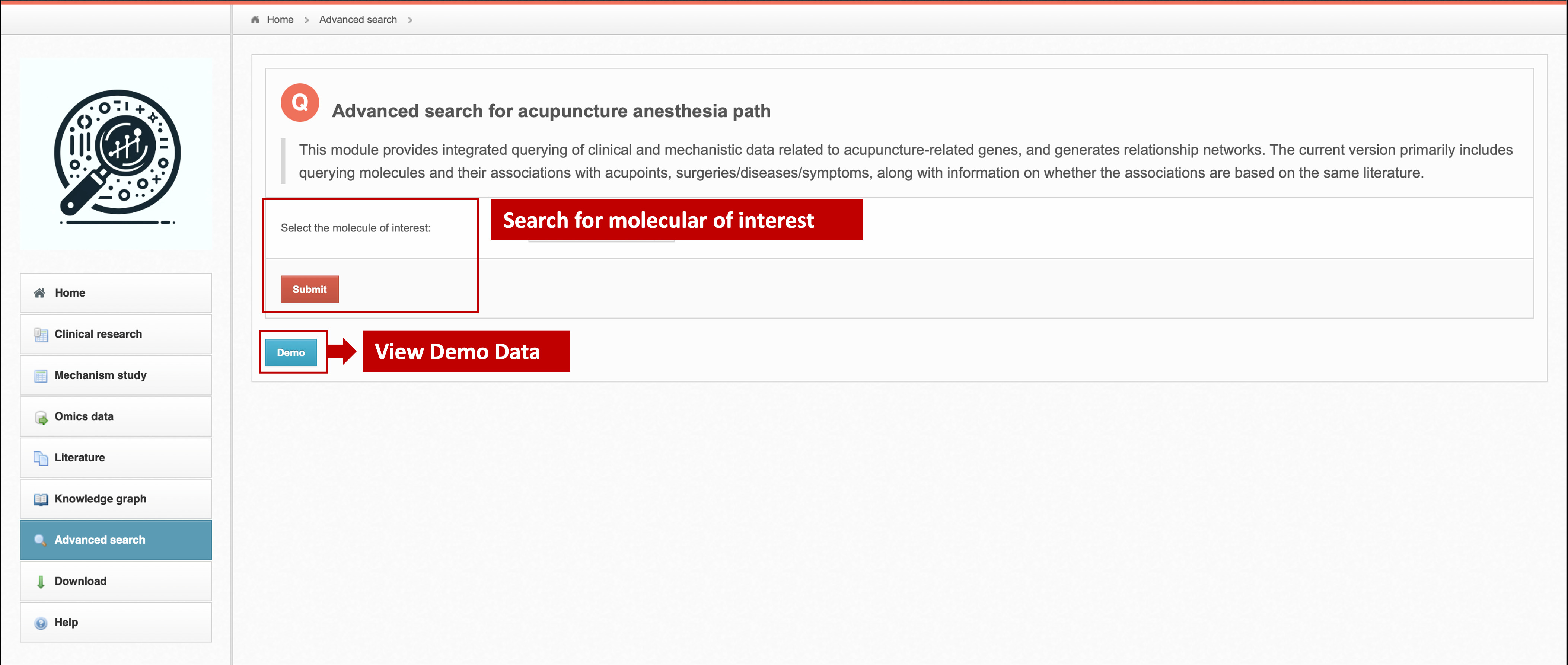
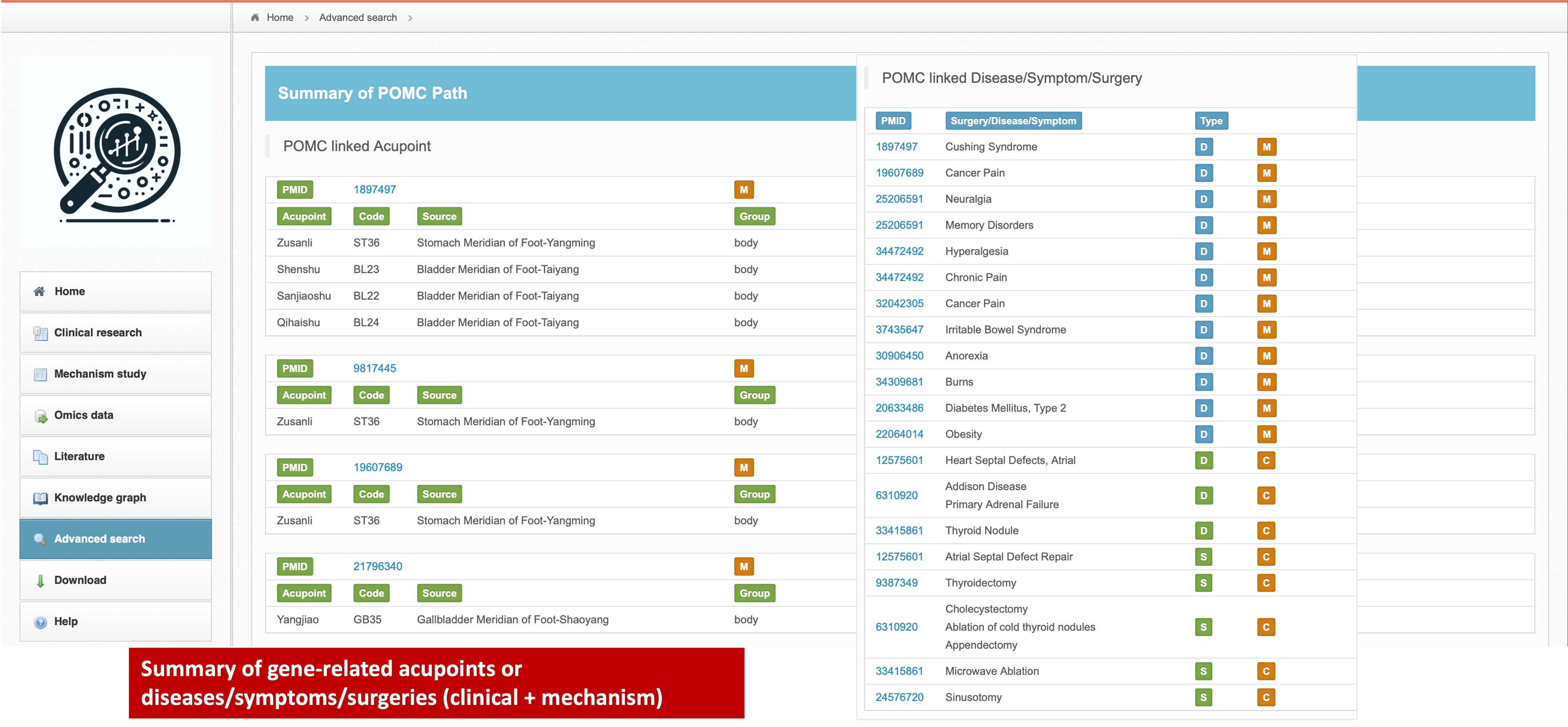
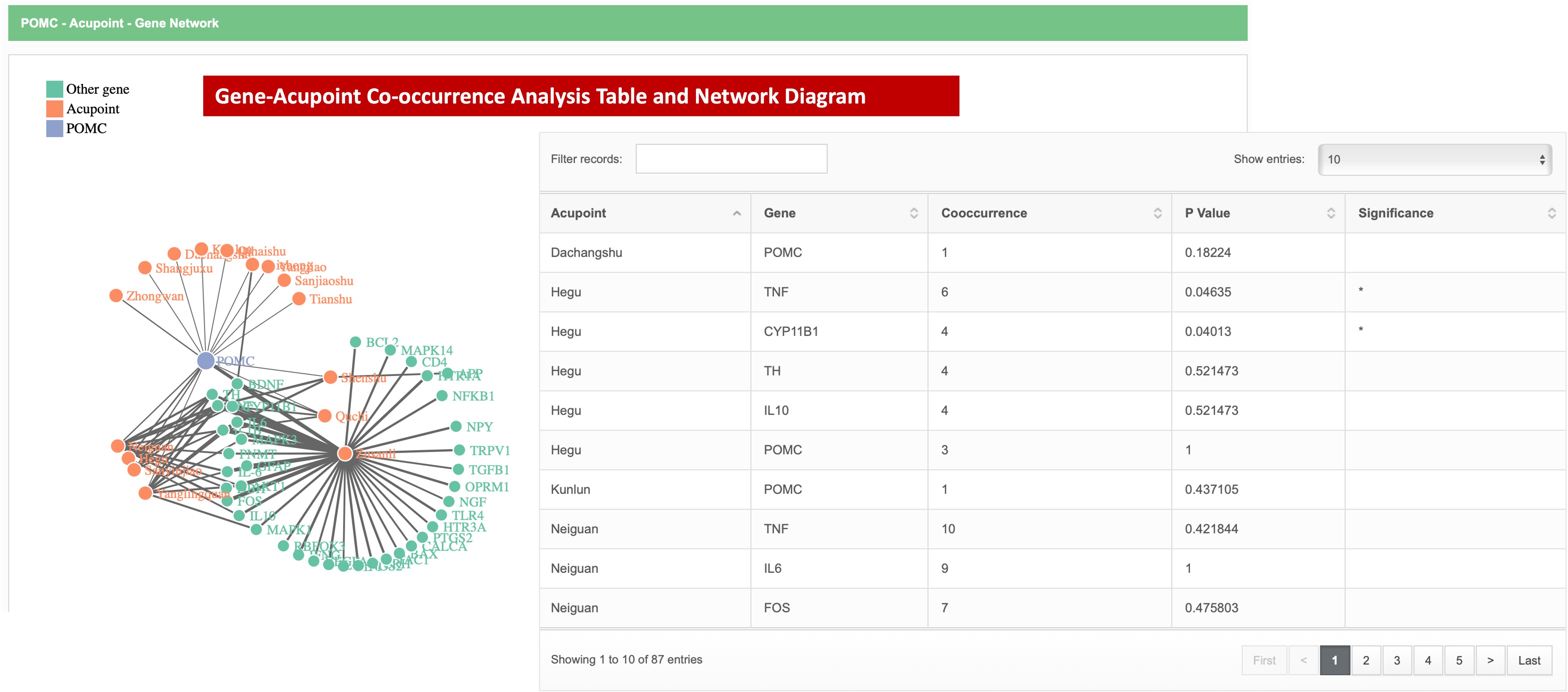
In addition, the Advanced Search module allows users to query the clinical and mechanism research findings related to specific molecules using keywords. Unlike the molecule search in the Knowledge module, the Advanced Search results present the knowledge and networks associated with the molecule in existing research, including its relationships with acupoints, and other linked genes.
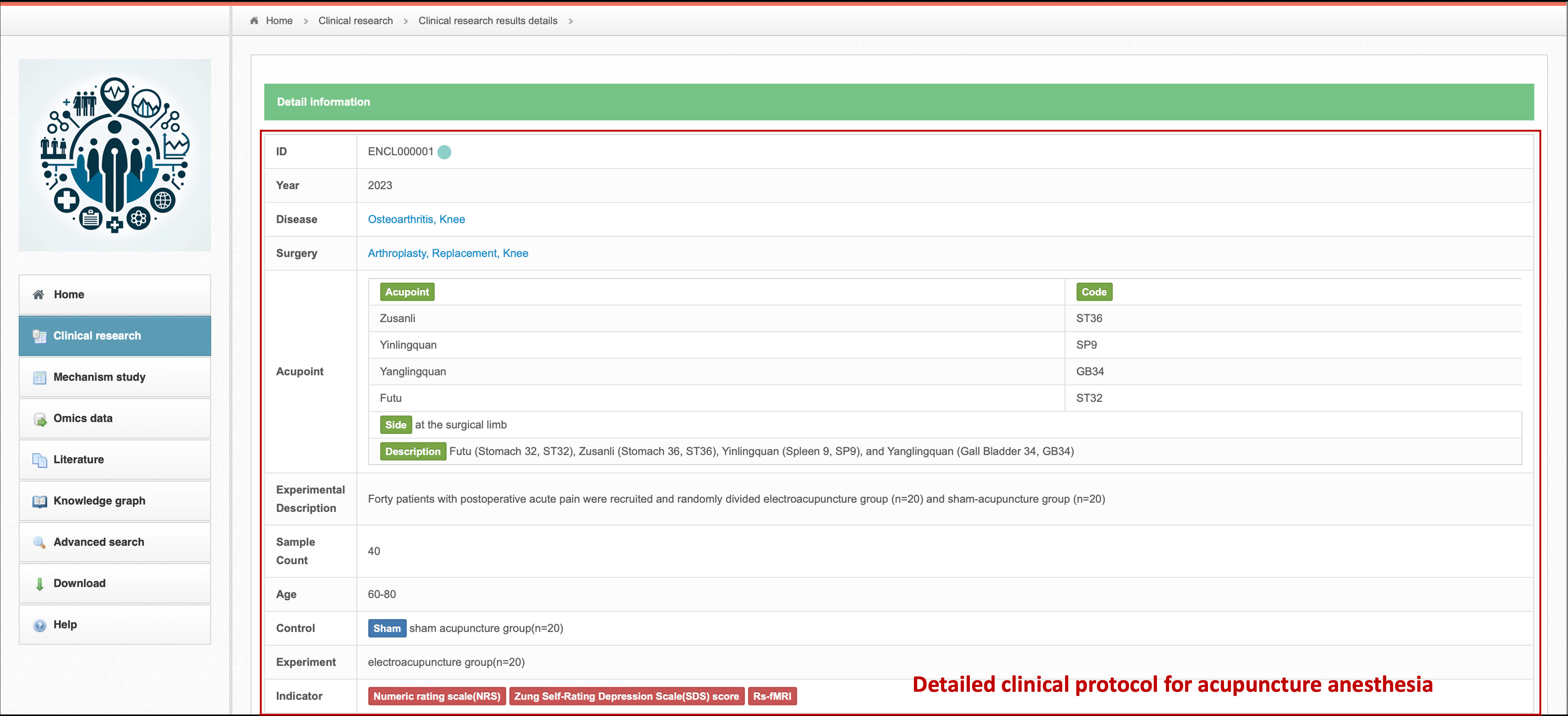
This module allows users to download data resources from the acupuncture anesthesia database platform, including acupuncture anesthesia-related standard data, acupuncture anesthesia-related knowledge graphs, and acupuncture anesthesia-related terminology annotation files.